ADA Mobile Toilet Rental for Occasions: Understanding Obtainable Device Needs
Planning toilets for an occasion has a tendency to begin as a logistics workout and swiftly comes to be something extra individual. The moment you picture a visitor getting here in a mobility device, a parent aiding an adult kid with a handicap, or an older participant that needs added room and a stable grab bar, the inquiry quits being abstract. It ends up being concerning whether somebody can get involved with dignity, without hassle, and without having to request special treatment on the spot.
That is why an ADA portable bathroom leasing should never ever be treated as a box to examine at the end of the planning procedure. For public events, events, community gatherings, and similar temporary configurations, accessibility has to be constructed into the restroom strategy from the beginning. If it is left until the site map is currently secured, organizers typically uncover far too late that the ideal device matter was not bought, the ground conditions are poor, or the placement compels individuals to take a trip an irregular route that defeats the function of having an obtainable device in the first place.
The good information is that the standard federal framework is clear. For portable bathroom collections in the United States, the regulating criterion is the 2010 ADA Requirements for Accessible Layout, as interpreted by the Gain access to Board and the Division of Justice. Those requirements do not go away just because the toilets are short-term. A short-term event can still develop actual gain access to obstacles, and the rules mirror that.
The requirement event coordinators usually miss
The factor that shocks lots of coordinators is easy: when you have a collection of mobile single-user commode units, a minimum of 5 percent of the systems in that cluster must be accessible. The Gain access to Board has actually made clear that this uses even at short-lived events.
That matters due to the fact that people usually presume one ada mobile washroom someplace on website suffices. Sometimes it is, in some cases it is not. The solution depends on the size of the collection. If your event has one restroom financial institution near the entryway and another near the food area, each cluster requires to be thought about on its own. The need is not almost the overall variety of units spread out across the residential or commercial property. It has to do with available availability where restroom groupings are in fact provided.
In technique, this is where issues begin. I have actually seen website strategies where the conventional units were smartly distributed across the place, however the single ada certified mobile bathroom was positioned off to the side in a totally different location since that was the only patch of level ground left. On paper, an obtainable system existed. In actual use, it developed additional travel, complication, and a sensation that disabled guests had actually been rerouted to a separate choice. That is hardly ever the experience a coordinator wishes to create.
Accessibility works best when the ada obtainable mobile bathroom belongs to the very same toilet approach every person else uses. People should not need to quest for it, ask staff where it is, or browse a path that was never ever really planned for wheelchair devices.
Temporary does not indicate exempt
One of one of the most persistent misconceptions around ada portable bathroom demands is the idea that momentary centers are somehow outside the range of access guidelines. That is not the situation for general mobile commode leasings utilized by the public at events.
The standards do make a distinction involving portable units at building sites when those devices are utilized specifically by construction employees. That narrow context is usually repeated out of place, and it can develop confusion. Occasion coordinators listen to that construction-site mobile systems might be discriminated in a particular regulatory context and incorrectly assume the same adaptability applies to performances, races, street fairs, weddings, or metropolitan celebrations. It does not follow that way.
For a public-facing occasion, the much safer and more precise frame of mind is this: if you are generating mobile bathrooms for participants, ease of access becomes part of the strategy. A certified method does not depend upon whether the units are permanent structures or temporary rentals. It relies on whether individuals can use them.
What makes a portable restroom accessible
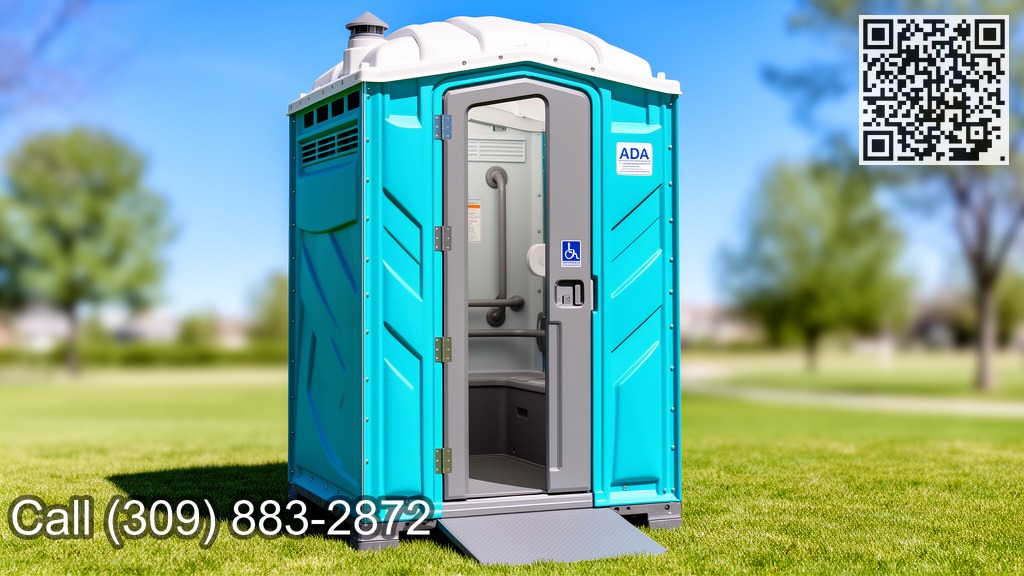
An ada certified accessible mobile restroom is not just a larger box with a different label. The criteria need greater than additional floor area. The unit needs to meet applicable commode space technical demands, including clearances for the fixture, turning space, and door maneuvering clearances, together with suitable water storage room clearance policies and get bar requirements.
That difference matters because many people casually make use of expressions like "wheelchair-friendly" or "handicap device" without really knowing what attributes are necessary. An ada handicap accessible mobile washroom has to sustain genuine activity and actual usage inside the area. A visitor may need to go into, turn, position next to the bathroom, shut the door, use grab bars for transfer, and leave safely. If any type of among those actions is obstructed, the device may be present yet not genuinely usable.
This is one factor experienced occasion teams ask comprehensive questions before confirming an ada mobile bathroom service. They do not simply ask whether an available unit is readily available. They ask whether the unit is planned to fulfill ADA accessibility expectations, whether it is appropriately recognized, and whether the prepared placement sustains available usage once it reaches the site.
There is one more functional layer below. Availability is not only about the inside of the unit. The course to the unit and the entryway itself matter just as much.
The course to the device is part of compliance
An usual preparation mistake is to focus completely on the toilet itself while ignoring the travel path bring about it. The Accessibility Board support explains that portable available devices should have an obtainable course and entryway. If ramps or landings are needed, those aspects also need to adhere to ADA technical requirements.
This is where otherwise cautious event strategies can decipher. A vendor may provide an ada compliant mobile toilet precisely as ordered, however if it is positioned throughout loosened gravel, behind a curb edge, at the end of a sloppy slope, or where a short-lived ramp configuration does not meet the criterion, the outcome is still a barrier.
On event day, these barriers turn up in really ordinary means. A guest stops at the beginning of a rough course and decides it is not worth the battle. A family member needs to ask staff for aid. A person who anticipated independent access has to depend upon others. None of that looks significant in a website map testimonial, but it matters deeply in the moment.
For that reason, washroom planning should begin at the ground level, actually. Prior to completing placement, it aids to walk the course yourself and picture utilizing it with restricted movement, a scooter, a pedestrian, or a mobility device. If the response is "it may be tough," it most likely is.
Identification is not a tiny detail
Accessible portable bathroom devices need to be identified with the International Sign of Ease Of Access. This is a details need, and it offers a practical objective. Individuals need to be able to situate the system without guesswork.
That may sound noticeable, yet in busy occasion environments, apparent information are usually the first to slide. Signage obtains blocked by secure fencing. Units are turned throughout setup. A row of commodes winds up encountering a crowd-control passage that makes the markings hard to see. Personnel assume participants will request for instructions if needed. Numerous will not.
An easily accessible system that is difficult to determine develops a refined type of exemption. It tells guests that their demands were technically acknowledged but not attentively accommodated. Excellent recognition assists protect against that. It also assists staff handle concerns efficiently, specifically when the site is crowded or noisy.
There is a more comprehensive principle below. Ease of access functions work best when they show up, incorporated, and understandable. The even more a guest needs to bargain or decipher the configuration, the much less available it feels, also if the core requirement has actually been met.
Counting systems correctly at event clusters
The 5 percent policy seems simple until a site comes to be huge enough to include multiple bathroom areas. Then organizers need to assume meticulously regarding what counts as a cluster and exactly how customers will actually move with the venue.
If one cluster offers the main gate and one more offers a far-off field or performance location, it is inadequate to rely upon one easily accessible device at just one location if the easily accessible demand exists across the website. The requirements relate to each cluster of mobile single-user toilet devices. That is the operational lesson numerous groups learn after their first huge event.
A helpful means to think of it is not in regards to stock, however in regards to accessibility factors. Wherever you create a bathroom location for the public, ask whether that destination includes an easily accessible alternative in the percentage needed. This changes the state of mind from "Do we have one somewhere?" to "Can people use washrooms where they are, without extra concern?"
Here is a brief preparation check that usually maintains teams out of difficulty:
- Identify each washroom collection on the occasion map as opposed to counting all devices sitewide as one total.
- Confirm that a minimum of 5 percent of the systems in each collection are accessible.
- Make sure the available unit is noted with the International Sign of Accessibility.
- Check the course, entrance, and any kind of ramp or touchdown conditions prior to distribution day.
- Recheck placement after arrangement, because site modifications often happen in the final hours.
Those five steps do not replace lawful testimonial or supplier know-how, https://pristineportablesil.com/service-area/ however they catch most of the practical failings that happen in between getting and opening.
The trade-off between benefit and correct placement
Event sites rarely supply perfect conditions. The flattest location may be farther from the crowd. The most main location might produce blockage. A wide path might contravene power line, tent stakes, or fencing. This is where judgment comes in.
I have seen organizers put an ada certified mobile toilet in a remote area because the grade there was better. I have likewise seen groups insist on a main area despite the fact that the technique was harsh enough to weaken ease of access. Neither selection is suitable by default. The better answer usually originates from fixing the course trouble and maintaining the unit where individuals naturally expect bathroom access to be.
That can call for earlier control with the whole procedures group. The toilet supplier alone can not solve a bad website strategy. If the easily accessible path goes across a service lane, someone might need to reroute traffic. If the ground is unsteady, the venue staff may need to resolve the surface. If a ramp or landing is required, its compliance can not be dealt with as an afterthought.
This is one of those areas where empathy boosts preparation. When you think of an impaired visitor getting here weary, in a group, during warmth or rainfall, your resistance for "close adequate" usually goes down. That is a healthy and balanced instinct.
Language matters, yet feature issues more
In the rental market, you will certainly hear numerous overlapping expressions: ada portable bathroom, ada mobile bathroom, ada compliant portable bathrooms, ada-compliant mobile washrooms, and ada compliant obtainable mobile washrooms. Individuals utilize them reciprocally, and in table talk that is reasonable. What matters most is not the tag in the quote sheet, however whether the system and its installation satisfy the access requirements that apply.
That suggests asking practical, grounded questions. Is the device planned as an ADA-accessible choice? Will it be plainly identified? Has the placement been evaluated for easily accessible strategy and entrance? Does the occasion map reward accessibility as part of the restroom design, not a side note?
A great deal of stress can be prevented when the coordinator, rental company, and site crew all make use of the exact same interpretation of success. Success is not "an obtainable device was delivered." Success is "a guest who needs it can find it, reach it, enter it, maneuver inside, utilize it, and leave without unnecessary trouble."
Where coordinators get exposed
The wider compliance environment around the ADA has only come to be more energetic, not less. Also outside physical website planning, access assumptions are getting focus throughout fields. That broader pattern issues because it reflects a real enforcement climate. Event ease of access is not a drowsy back-office concern. It belongs to a bigger understanding that gain access to obligations remain important across layouts, including short-lived ones.
For event drivers, this means washroom availability ought to be treated with the exact same severity as crowd safety and security, emergency situation access, and sanitation preparation. It is not rare or niche. At virtually any type of public event, someone will certainly need the added area, turning room, or assistance features offered by an ada-compliant portable toilet.
The threat of getting it wrong is not only regulatory. It is reputational and human. Guests bear in mind when they were pushed into a tough or unpleasant circumstance. Households keep in mind when an easy outing developed into a difficult shuffle to locate a usable bathroom. Those are the moments that shape whether individuals come back following year.
A reasonable conversation with your rental provider
The finest ada mobile bathroom rental discussions specify. Vague requests welcome obscure results. Claiming "we require one handicap washroom" usually brings about presumptions. Saying "we need accessible systems in each portable restroom cluster, with easily accessible routes and clear recognition" is a lot more difficult to misunderstand.
It likewise assists to talk early. Easily accessible inventory can be a lot more minimal than typical supply throughout top occasion seasons, particularly for weekends when events, races, and area occasions stack up. Waiting up until the last minute can leave you with less positioning selections and more stress to compromise.
If you are managing a multi-zone occasion, bring a site map to the conversation. Talk via each collection. Define the terrain truthfully. Validate who is accountable for last positioning and who will certainly validate route conditions when other framework is mounted. A tidy quote is just the beginning. Conformity commonly relies on the final 10 feet around the unit.
These inquiries are worth asking prior to you lock anything in:
- Which bathroom collections on our map matter as different collections for planning purposes?
- Where will certainly each ada accessible mobile toilet be positioned within those clusters?
- How will guests reach each obtainable unit by an obtainable route?
- Will any ramp or touchdown conditions require special focus at the site?
- How will the systems continue to be clearly determined as soon as all secure fencing, barricades, and indicators are installed?
That is not overplanning. It is the level of detail that stops awkward shocks on occasion day.
The distinction visitors can feel
When obtainable bathroom preparation is done well, many people barely observe it, and that is specifically the factor. The available device is where it ought to be. The course really feels typical. The signs is clear. No person requires a team escort. No person has to explain their special needs to a volunteer simply to discover a restroom.
When it is done poorly, the opposite happens. The obtainable system may technically exist, yet every action around it indicates that the individual was not actually thought about. For an individual that takes care of gain access to barriers on a regular basis, that sensation knows and exhausting.
Empathetic planning changes that experience. It does not call for grand gestures. It calls for accuracy, interest, and regard for exactly how individuals actually relocate via area. With ada certified mobile restrooms, the law gives the framework, but the high quality of implementation is what guests remember.
For event organizers, that is the actual criterion to aim for. Not bare minimums. Not presumptions. A toilet strategy that benefits the people who need it most, in the exact same sensible, average way it benefits everybody else.
 Ask ChatGPT
 Ask Grok
 Ask Perplexity
 Ask Claude
 Ask Google AI
 Ask You